Crossref members register around 37,000 records daily. All this metadata is openly shared with the global scholarly community through our free APIs. We receive over two billion calls to our API each month, signalling its use by hundreds of tools and services worldwide, supporting the discovery and assessment of scholarly metadata. As part of a new series in our blog, we will spotlight the diversity of tools and integrations that rely on Crossref metadata to serve the scholarly community. In this initial post, we chat to Luca Foppiano, the developer and maintainer of Grobid1, to learn about how Grobid uses Crossref metadata to improve the extraction and enrichment of bibliographic information from scholarly PDFs.
On behalf of the Nominating Committee, I’m pleased to share the slate of candidates for the 2026 board election. Every active member organisation is invited to submit a ballot to elect the incoming board class.
We’re providing a summary of the board’s July 2026 meeting. The July board meeting is our only in-person meeting. The board gathers for two days of strategic thinking and long-range planning, as well as conducting annual board business. This year, we focused on allocating surplus funds we have on hand to invest in a three-year project to redesign the content system. In a related discussion, we decided to lower content registration fees starting in 2027 because we’ve had a demonstrated history of generating surpluses, exceeding what we need to run Crossref. We also discussed the board structure, as part of our regular review of stakeholder governance. And we conducted annual board business, such as approving the audited financial statements and reviewed our risk register and mitigation plans.
The resolutions are available on the dedicated section of our website, which also lists the members of the Board and offers further information about our governance.
We also managed to squeeze in watching a World Cup game over dinner.
Starting today, funder names deposited in Crossref metadata without an identifier will be matched to ROR IDs, to support an open and connected Research Nexus. Funding information is an increasingly important part of the scholarly record. The improved matching strategy supports researchers, funders, institutions, and meta-researchers, who rely on that information to understand how research is supported and what outcomes that support produces.
Funders are joining Crossref to register their grants so that they can more easily and accurately track the outputs connected to the research they support.
Once you’re a member, registering grants with us means giving us information about each awarded grant, including a DOI which uniquely and persistently identifies each record. You can use the new Metadata Manager tool or direct XML deposit methods to deposit and update grant metadata. This section focuses on grants, but research funders can also register other record types such as reports, data, and working papers.
Decide which grants to register first, as you get into the swing of things. For example, pilot a particular country, or area of support. It’s better to start with newly-awarded grants, and then move on to older or long-running awards - these are cheaper to register, and are more likely to have produced research papers, so they’re great for demonstrating the full potential of connected research metadata.
A DOI is made up of a DOI resolver, a prefix, and a suffix. When you join Crossref as a member, we give you a DOI prefix. You combine this with a suffix of your choice to create a DOI. Although some funders choose to use their internal grant identifier as the DOI suffix, we advise you to make your suffix opaque, meaning that it does not encode or describe any information about the work. Your DOI becomes active once it is successfully registered with us. Read more about constructing your DOIs.
Should a grant move to a new landing page, the URL in the grant’s metadata is updated to point to the new location. There’s no charge to update metadata for existing deposits.
Grants can be registered for all sorts of support provided to a research group or individual, such as awards, use of facilities, sponsorship, training, or salary awards.
Here’s the section of our schema for grant metadata. If you’re working with a third-party system, such as Proposal Central or EuroPMC, they may be able to help with this piece of work.
Registering grant metadata using the grant registration form ``
You can use the grant registration form to register grants, with no prior knowledge of XML. You fill out the form and the XML is created for you in the background. You enter your account credentials and the metadata is submitted directly.
If you’d prefer to work directly with XML, you may be able to map your own data and identifiers to our schema. See our example deposit file - this is a full example, and many of the fields it contains are optional, but we encourage you to provide as much information as you can. Rich metadata helps maximum reuse of the grant records you register with Crossref. This .xsd file helps explain what goes into each field, and the parameters (length, format) of what is accepted in each field. Here’s a less techy version.
When you’ve created your XML files, use our checker to test them - this will show any potential errors with your files. For help with resolving problems, send your XML file and the error message to Support.
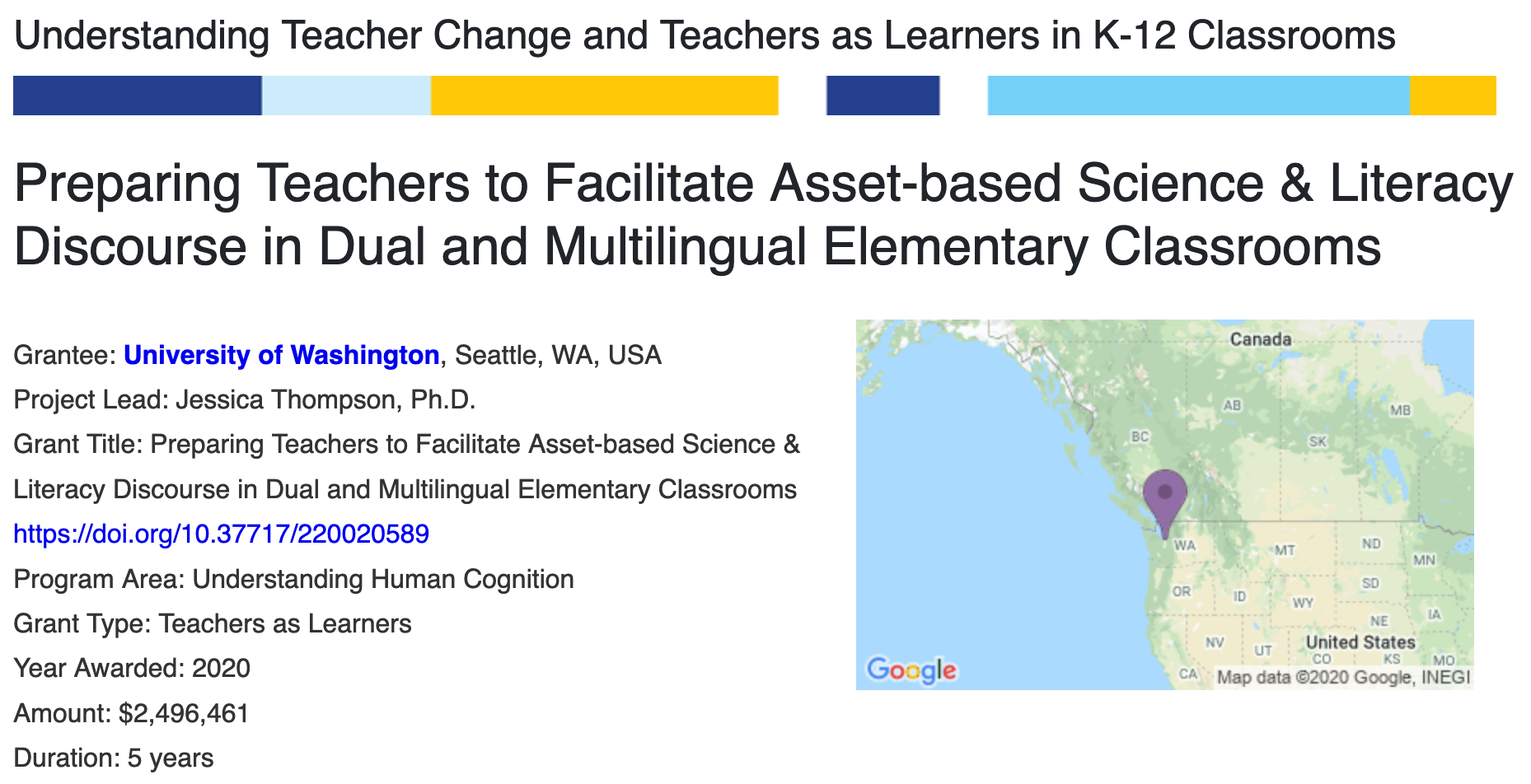
Once your submission is successful, your grant DOIs are ‘live’ and ready to be used. It’s good practice to add the grant DOI to the landing page for the grant, as in this example for https://doi.org/10.37717/220020589:
Let your grant submission systems, awardees, and other parties know you are supporting Crossref grant identifiers, and that they should start collecting these identifiers too. Crossref grant metadata (including grant DOIs) is made openly available through our APIs, so it can be used by third parties (including publishers, grant tracking systems) to link grants to related research outputs.