On behalf of the Nominating Committee, I’m pleased to share the slate of candidates for the 2026 board election. Every active member organisation is invited to submit a ballot to elect the incoming board class.
We’re providing a summary of the board’s July 2026 meeting. The July board meeting is our only in-person meeting. The board gathers for two days of strategic thinking and long-range planning, as well as conducting annual board business. This year, we focused on allocating surplus funds we have on hand to invest in a three-year project to redesign the content system. In a related discussion, we decided to lower content registration fees starting in 2027 because we’ve had a demonstrated history of generating surpluses, exceeding what we need to run Crossref. We also discussed the board structure, as part of our regular review of stakeholder governance. And we conducted annual board business, such as approving the audited financial statements and reviewed our risk register and mitigation plans.
The resolutions are available on the dedicated section of our website, which also lists the members of the Board and offers further information about our governance.
We also managed to squeeze in watching a World Cup game over dinner.
Starting today, funder names deposited in Crossref metadata without an identifier will be matched to ROR IDs, to support an open and connected Research Nexus. Funding information is an increasingly important part of the scholarly record. The improved matching strategy supports researchers, funders, institutions, and meta-researchers, who rely on that information to understand how research is supported and what outcomes that support produces.
Strengthening Scholarly Publishing in Africa is a collaborative webinar series bringing together ASSAf, Crossref, DOAJ, EIFL, and PKP to share practical guidance, resources, and approaches for strengthening the publishing ecosystem in the region. This series responds to the growing interest in open access, digital publishing, stronger editorial practices, and greater visibility of research publishing across Africa. Each partner organisation has long experience of building that capacity in the area of their expertise. In this series, we’re coming together to offer a more holistic learning experience to the community of African publishers, putting different aspects of the publishing process in their broader context.
Crossref is a membership organisation, and it’s the global community of members that creates the Research Nexus together. Meeting our community locally is a highlight and an important learning experience. This year, we started by connecting with a growing community in Accra, Ghana - our first in-person event in the country included in our GEM program. From 14 members in 2023 to 31 in 2025, our community in Ghana is blooming.
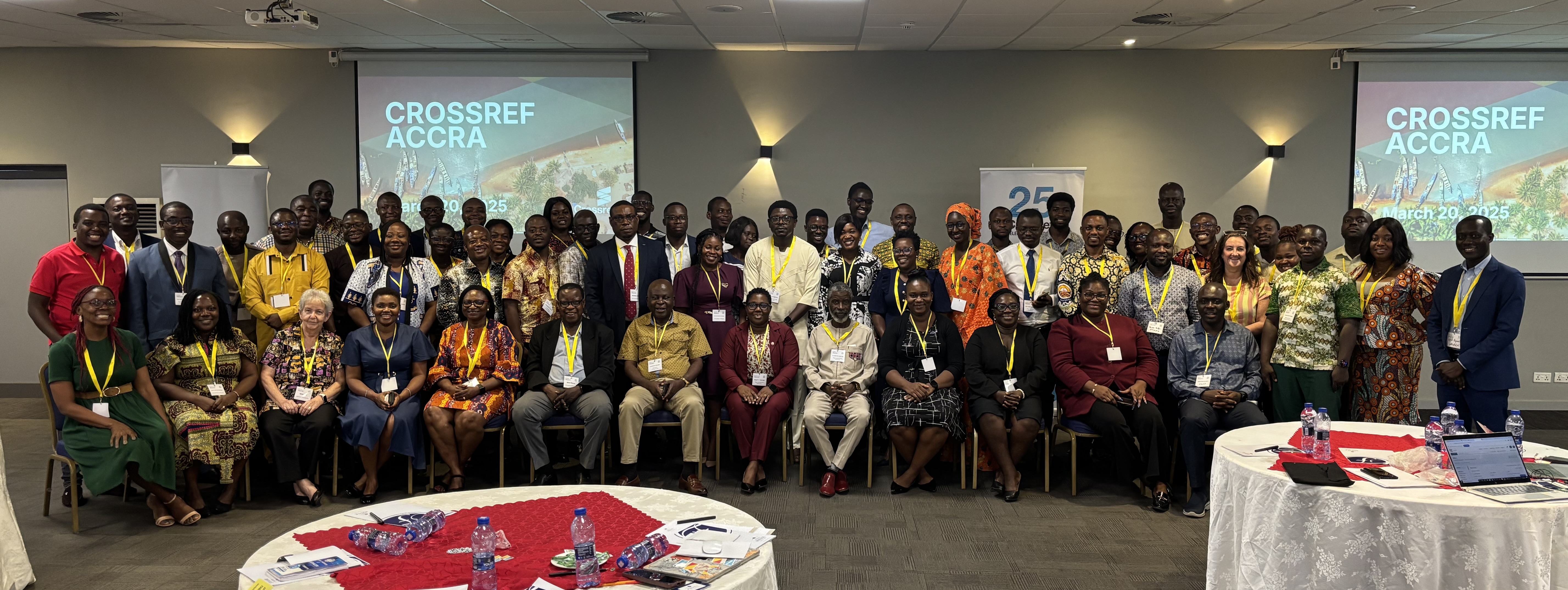
At its core, Crossref Accra 2025 was about showing up for the community in Ghana - listening, learning, and building together. On the 20th of March, we welcomed 66 participants: journal editors, university staff, librarians, and researchers. People who are doing the real work of making scholarly publishing happen in the region.
Photo: Participants from across Ghana’s research and publishing landscape.
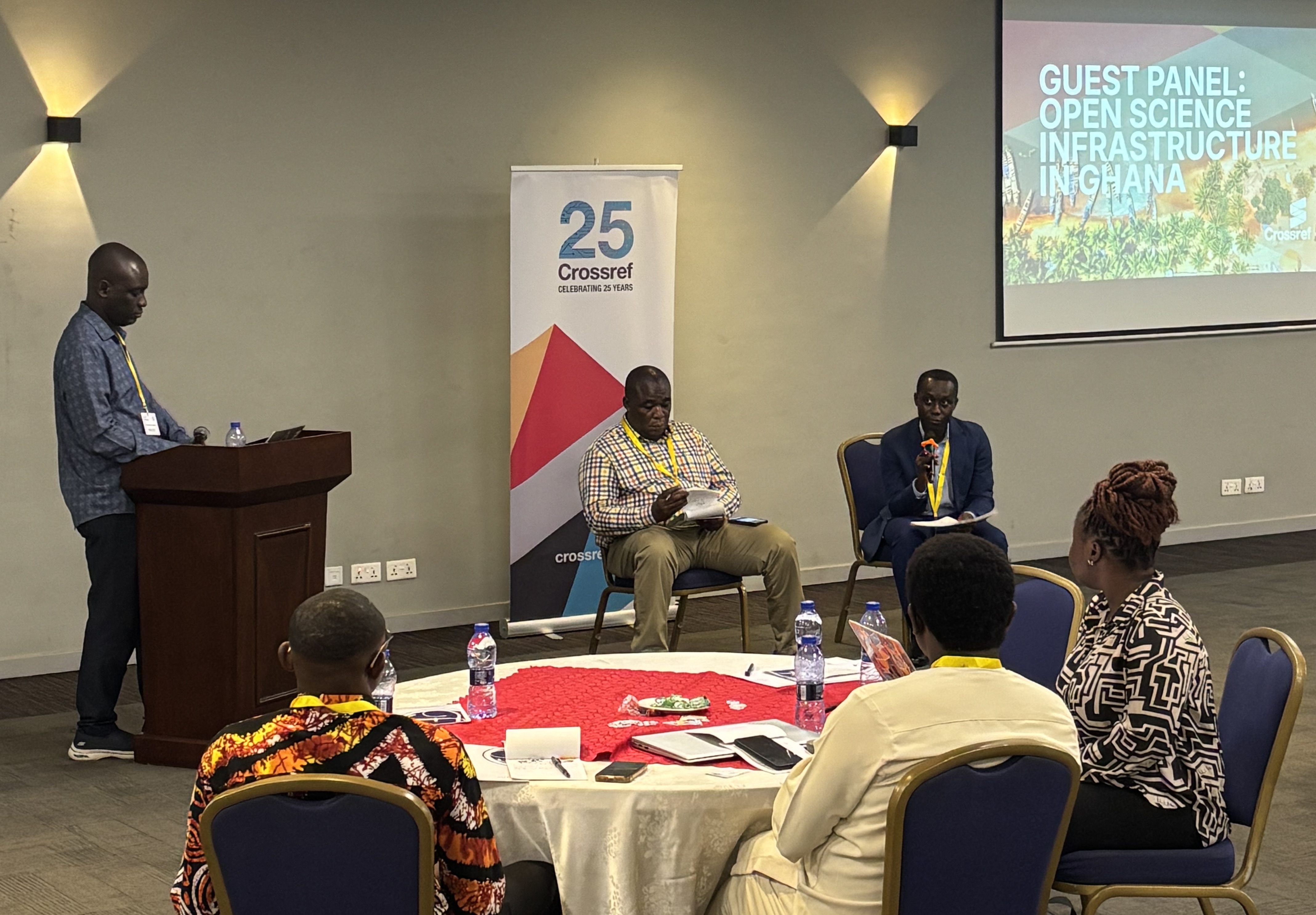
We started the day with a walkthrough of Crossref’s services, then shifted into more tailored conversations - talking metadata quality, improving discoverability, and making Crossref tools work for the local context. The panel featuring AJOL, WACREN, and CARLIGH was a key moment. We heard honest reflections about journal sustainability, the barriers to indexing, and how Open Access can grow if local infrastructure is supported. Each organisation shared how they’re working to strengthen research communities and where they see Crossref fitting into that bigger picture.
Photo: Crossref Ambassador Richard Lamptey moderates a panel with WACREN’s Effah Amponsah, CARLIGH’s Mac Anthony Cobblah, and AJOL’s Kylie van Zyl on sustaining journals and advancing Open Access in the region.
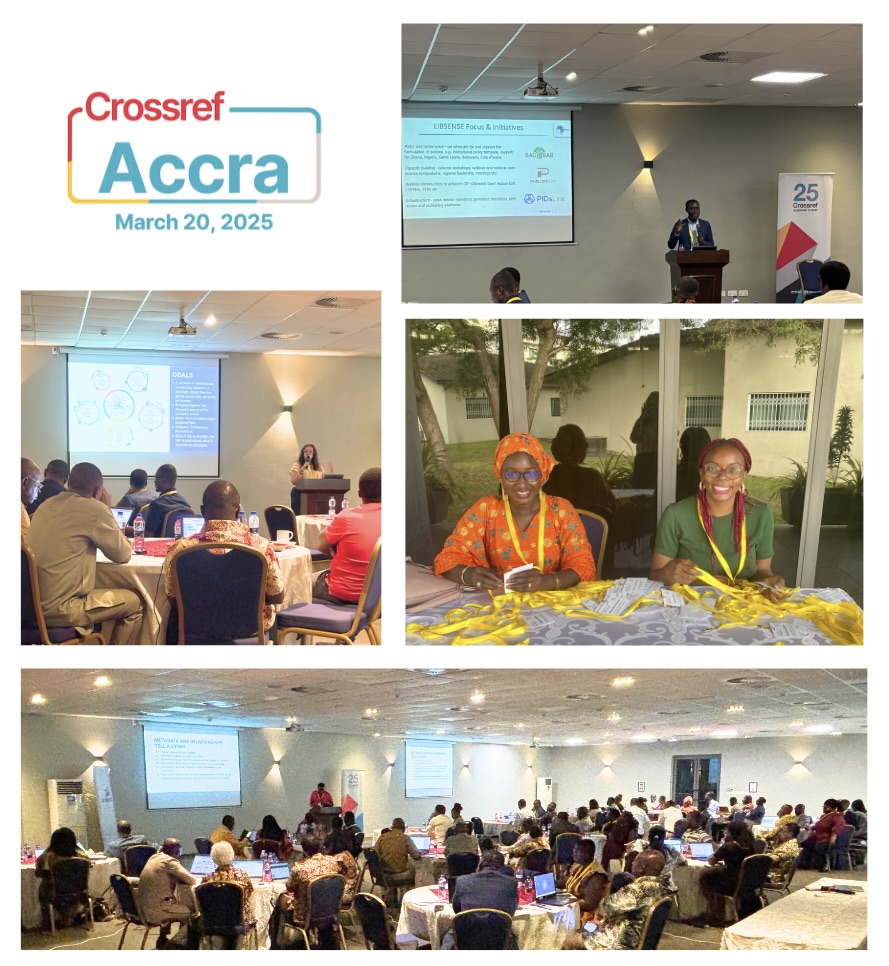
During the dedicated listening session, participants spoke candidly about the cost burden of APCs, the over-reliance on foreign journals for recognition, and the uphill battle local journals face, from limited resources to slow workflows. There was a clear push for stronger local publishing platforms and more training around tools like OJS. People want technical clarity: How does Crossref fit into their workflows? What’s involved in registering metadata and DOIs? What’s the actual value? Many also voiced interest in strengthening relationships with indexing services, and connecting university presses more directly with Crossref. The afternoon breakout sessions were hands-on. One group explored how to use the Participation Reports to check metadata completeness, while the other dove into using the Crossref API. People started swapping tips, asking questions, and brainstorming ways to improve how their institutions handle metadata. Several wanted to know how to automate more of their workflows through OJS, boost reference linking, and pull better reports from the Crossref system.
Photo: A collage of snapshots capturing activities at the Crossref Accra event.
Outside the main event, we also visited some of our members and stopped by the Association of African Universities. These visits gave us more time for deeper conversations about publishing workflows, ORCID uptake, metadata visibility, and the bigger picture of Open Access in Ghana. We heard a lot about the potential for more equitable partnerships and stronger local ownership of publishing infrastructure.
Post-event feedback made one thing clear: people want more opportunities to learn - more practical workshops, more guidance on using Crossref tools, and more support navigating the technical side of things. There’s growing interest in forming a local user group, a space to keep sharing, troubleshooting, and moving forward together. And the desire to improve indexing and visibility was a recurring theme. People see registering identifiers for content as an essential step on that journey. There’s also a broader concern about long-term sustainability and ethical publishing practices. Many journals are doing their best in tough conditions, and there’s a real appetite for honest conversations about quality, trust, and resilience.
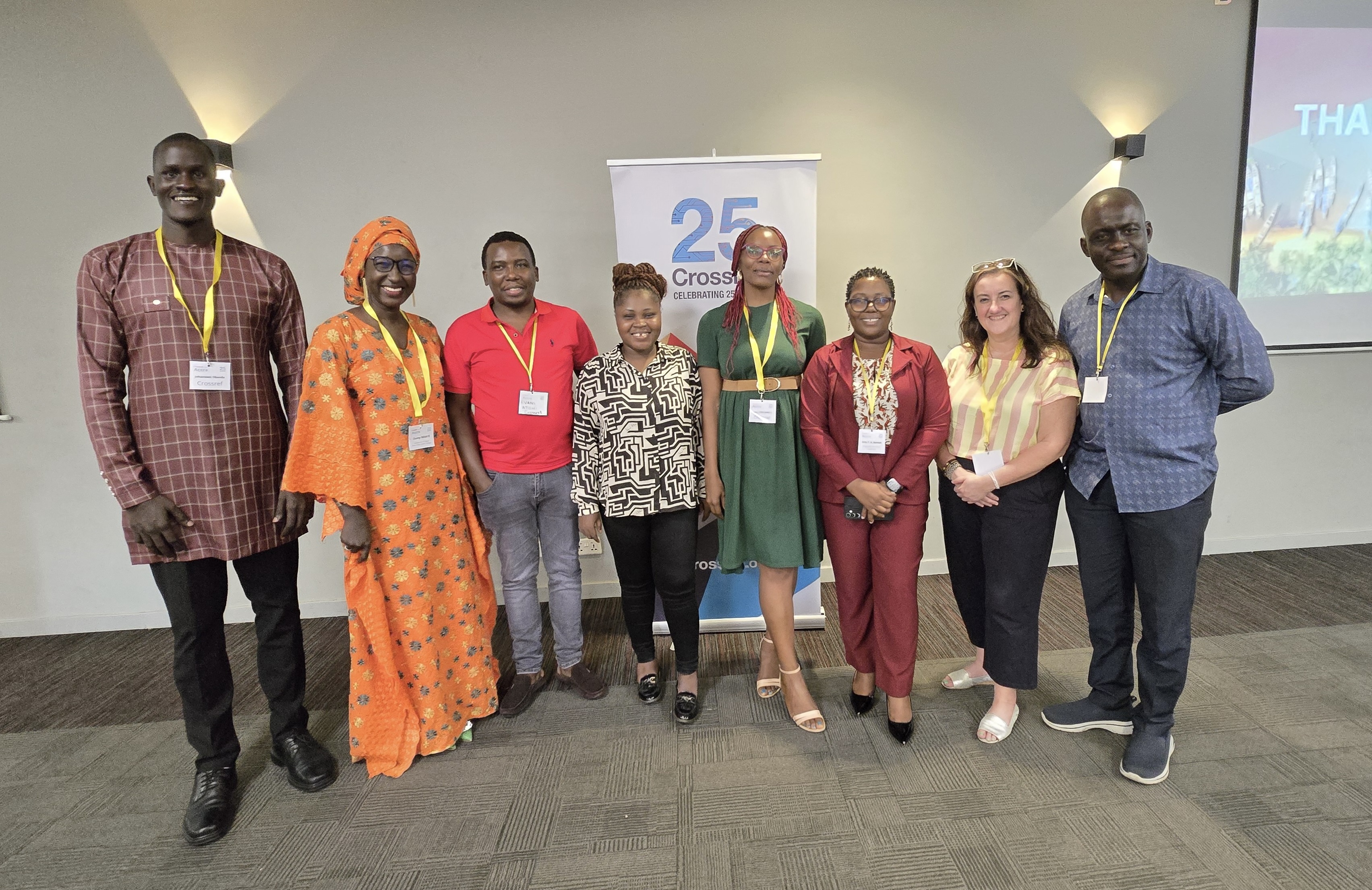
Photo: Crossref staff and ambassadors with member Amy Asimah from Regional Maritime University. Pictured: Johanssen Obanda, Oumy Ndiaye, Evans Atoni, Patience Mbum, Audrey Kenni Nganmeni, Ginny Hendricks, and Richard Lamptey.
Crossref Accra 2025 reminded us how valuable these local gatherings are - not just for sharing tools and workflows, but for building lasting connections. We’re grateful to our Ambassadors and team who helped make it happen, and we’re committed to deepening our support across the region. There’s so much potential in Ghana’s scholarly community, and in West Africa more broadly, as we’ve seen again at WACREN in Senegal a couple of weeks later. We’re committed to working with local partners to help it grow.